CARACAS, Venezuela (AP) — Hours after a daring military operation ousted President Nicolas Maduro and forced him to flee the country on Saturday, President Donald Trump said the United States would at least temporarily administer Venezuela and exploit its vast oil reserves for sale to other nations.
The bold move is the culmination of an intense pressure campaign by the Trump administration against the South American country and its autocratic leader, as well as months of covert planning that have resulted in the most aggressive U.S. regime-change attempt since the 2003 invasion of Iraq.
Speaking to reporters hours after Maduro’s capture, Trump outlined his plan to exploit the power vacuum to “fix” the country’s oil infrastructure and sell “large quantities” of oil to other countries.
In a speech, Venezuela’s vice president called on the United States to release Maduro, whom he described as the country’s legitimate leader.
Maduro and his wife, seized overnight from their home on a military base, were aboard a U.S. warship on their way to New York to face prosecution for a Justice Department indictment accusing them of participating in a narco-terrorism conspiracy.
The legal basis for the operation was not immediately clear, although the Trump administration presented it—like previous deadly raids on ships in the Caribbean—as necessary to stem the flow of dangerous drugs. It also unveiled plans to exploit the power vacuum to “repair” the country’s oil infrastructure and sell “large quantities” of oil abroad.
Trump also claimed that the U.S. government would help run the country and was already doing so, though no concrete evidence of this was immediately apparent. Venezuelan state television continued to broadcast pro-Maduro propaganda, showing live footage of his supporters demonstrating in the streets of Caracas.
“We’re going to run the country until such time as we can do a safe, proper and judicious transition,” Trump said at a Mar-a-Lago news conference where he boasted that this “extremely successful operation should serve as warning to anyone who would threaten American sovereignty or endanger American lives.”
“We’re going to run the country until such time as we can do a safe, proper and judicious transition,” Trump said at a Mar-a-Lago news conference where he boasted that this “extremely successful operation should serve as warning to anyone who would threaten American sovereignty or endanger American lives.”
Maduro and other Venezuelan officials were indicted in 2020 for conspiracy related to narco-terrorism cases. However, on Saturday, the U.S. Department of Justice issued a new indictment against Maduro and his wife, Cilia Flores, calling the regime a “corrupt and illegitimate government” fueled by drug trafficking that has flooded the United States with cocaine. The U.S. government does not recognize Maduro as the country’s leader.
Trump posted a photo on social media showing Maduro in a tracksuit, blindfolded, aboard the U.S. aircraft carrier USS Iwo Jima.
Early morning attack
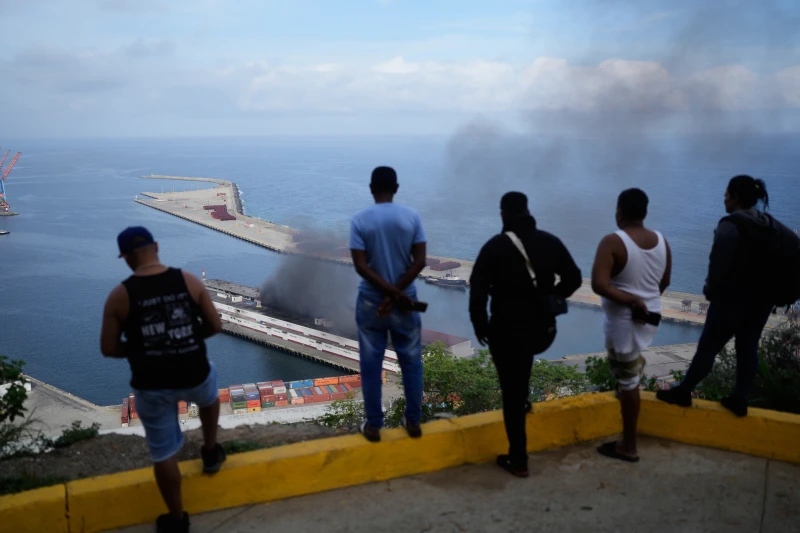
This operation followed a months-long pressure campaign by the Trump administration against the Venezuelan leader, which included a significant deployment of US forces in South American waters and attacks on ships in the eastern Pacific and the Caribbean accused of drug trafficking. Last week, the CIA conducted a drone strike on a port area suspected of being used by Venezuelan drug cartels; this was the first known direct operation on Venezuelan soil since the start of the US raids in September.
U.S. captures Venezuelan President Nicolás Maduro
Maduro denounced the military operation, calling it a blatant attempt to overthrow him.
Moreover, exactly 36 years after the 1990 US invasion of Panama, which led to the surrender and arrest of President Manuel Antonio Noriega, the operation in Venezuela was launched in the dark early Saturday morning. Trump stated that the United States had turned off “most of the lights” in the capital, Caracas, as troops deployed to extract Maduro and his wife.
General Dan Keane, Chairman of the Joint Chiefs of Staff, indicated that US forces had trained intensively for months for this operation, gathering precise intelligence on Maduro: his movements, his diet, and even details about his pets and clothing.
“We think, we plan, we train, we rehearse, we analyze the results, and we rehearse again and again,” Keane added. “Not to succeed, but to ensure we make no mistakes.”
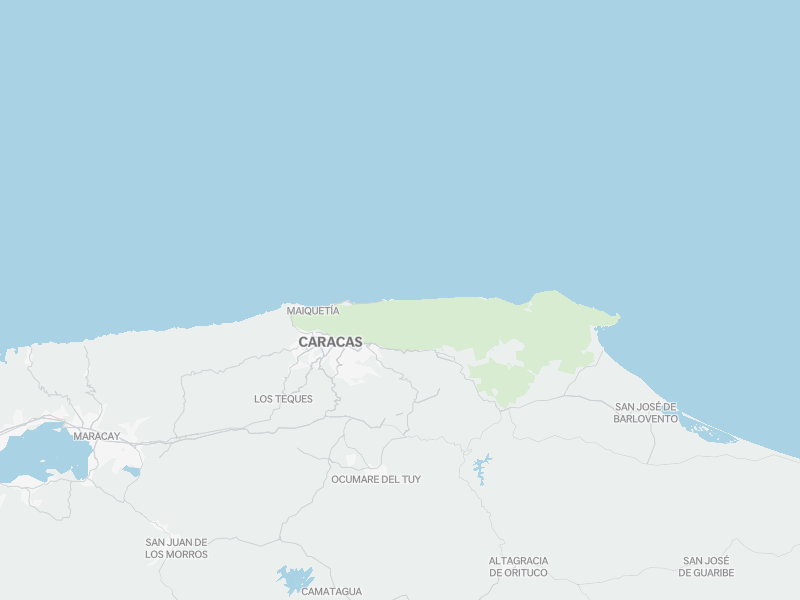
Early Saturday morning, several explosions were heard and planes flew low over Caracas. The Maduro government accused the United States of attacking civilian and military installations, calling the attack “imperialist,” and urged citizens to take to the streets.
The attack lasted less than 30 minutes and the explosions — at least seven blasts — sent people rushing into the streets, while others took to social media to report what they saw and heard. Some Venezuelan civilians and members of the military were killed, said Vice President Delcy Rodríguez, without giving a number. Trump said some U.S. forces were injured but none were killed.
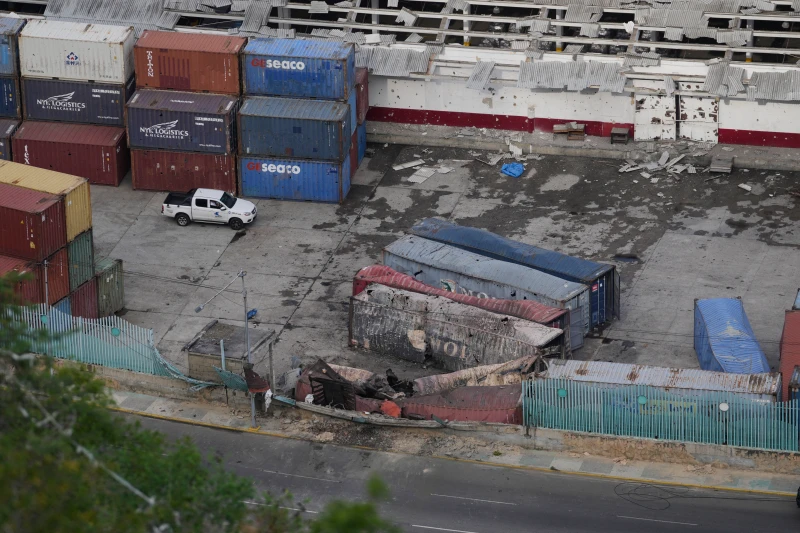
Videos from Caracas and an unidentified coastal city show thick smoke and gunfire blanketing the area, while repeated, muffled explosions light up the night sky. Other footage shows cars traveling on a highway, with explosions illuminating the hills in the background. The Associated Press has authenticated the videos.
Smoke rose from an aircraft hangar at a military base in Caracas, while another military facility in the capital experienced a power outage.
According to Venezuelan law, Rodríguez was supposed to succeed Maduro. Although this has not been officially confirmed, she issued a statement demanding proof that Maduro and his wife are alive.
Some streets in Caracas were packed with people.
The ruling party in Venezuela has controlled the country since 1999, when Maduro’s predecessor, Hugo Chávez, took office, promising to improve the lot of the poorest and later implement what he called a socialist revolution.
Maduro came to power after Chávez’s death in 2013. His re-election in 2018 was widely considered a sham, given the ban imposed on the main opposition parties. During the 2024 election, the ruling party’s electoral authorities declared him the winner just hours after the polls closed, but the opposition gathered compelling evidence of his defeat, with a margin more than twice that of the candidates.
Demonstrating the divisive nature of Maduro’s personality, the population took to the streets both to protest his arrest and to celebrate it.
During a demonstration in Caracas, the Venezuelan capital, Mayor Carmen Meléndez joined the crowd demanding Maduro’s return.
The crowd chanted: “Maduro, hold on, the people are rising up! We are here, Nicolás Maduro. If you can hear us, we are here!”
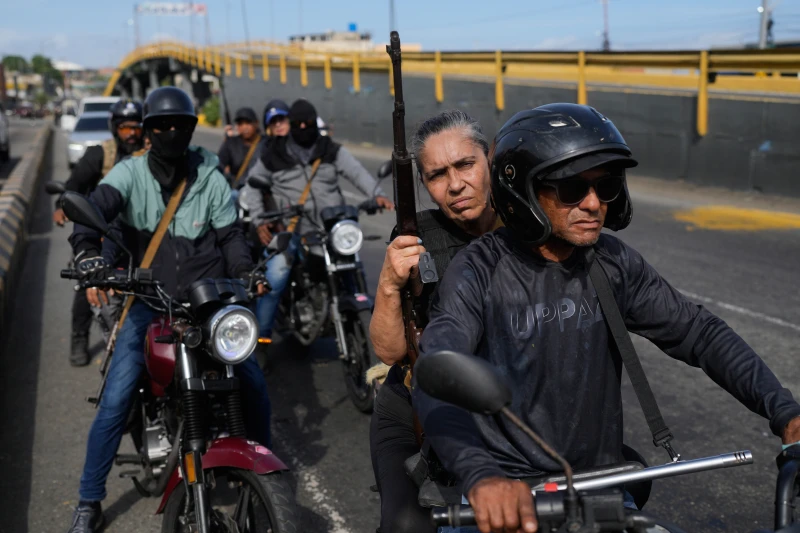
Earlier in the day, armed men and members of a civilian militia had taken to the streets of a Caracas neighborhood long considered a stronghold of the ruling party.
Elsewhere in the city, the streets remained deserted for hours after the attack, as residents processed the events. Some areas were without power, but traffic flowed normally.
“How do I feel?” said Norris Prada, a Caracas resident, sitting on a deserted street, his eyes glued to his phone. “Scared, like everyone else.” Venezuelans awoke in terror, and many families didn’t sleep a wink that night.
In Santiago, the Chilean capital, people waved Venezuelan flags and banged pots and pans while cars honked their horns.
In Doral, Florida, home to the largest Venezuelan community in the United States, residents draped themselves in Venezuelan flags, ate doughnuts, and cheered to the music. At one point, the crowd chanted, “Freedom! Freedom! Freedom!”
Legal Questions
Legal experts immediately raised concerns about the legality of the operation.
Members of Congress from both parties expressed reservations and categorical objections to the U.S. attacks on vessels suspected of drug trafficking off the Venezuelan coast. Congress has not explicitly authorized the use of military force in such operations in the region.